
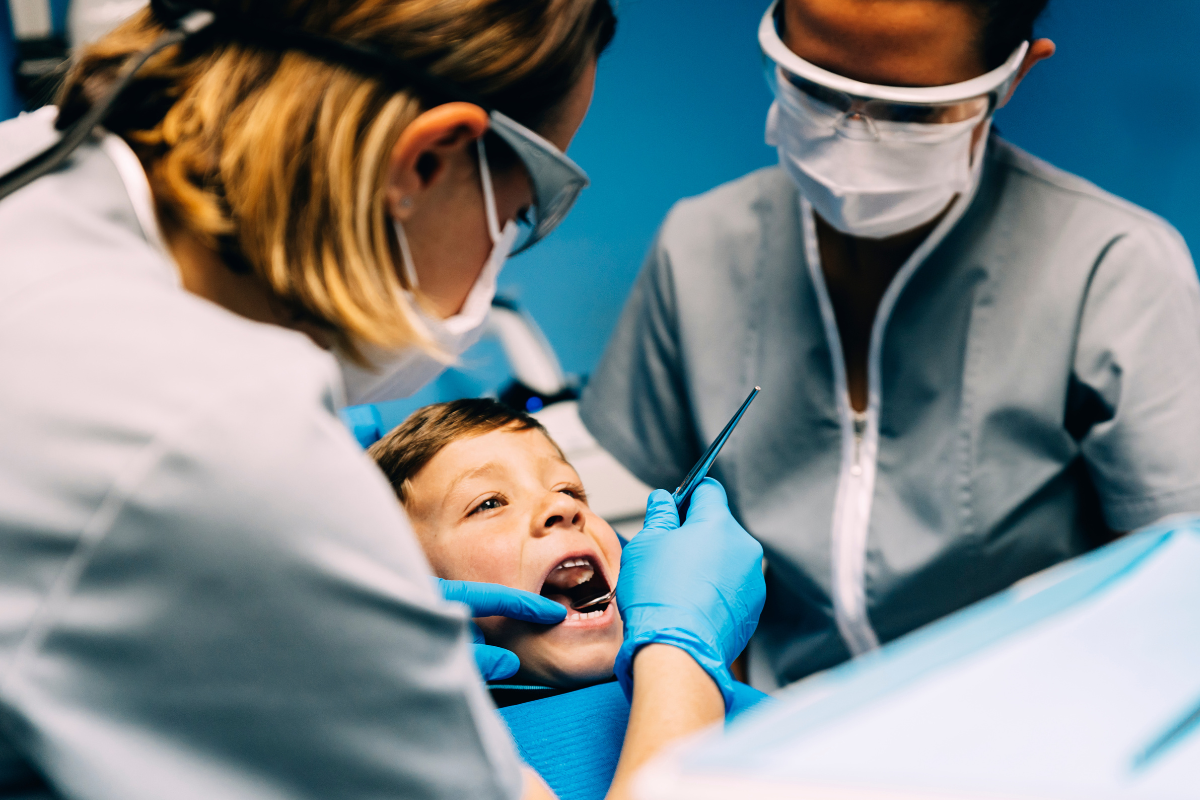
Can a Dental Laser Treat Cavities Without the Traditional Drill?
August 17, 2026 11:05 amThe sound of a dental drill can be one of the first things a child remembers about visiting the dentist. For some children, the noise, vibration, and sensation can make an otherwise routine appointment feel stressful. Parents naturally look for treatment options that can make dental care more comfortable without compromising the quality of care.
Advances in dental technology have introduced lasers as another tool that dentists may use for certain procedures. Depending on the tooth, the extent of decay, and the child’s individual needs, laser technology may be an option for treating some cavities and other soft- or hard-tissue conditions.
For parents researching pediatric laser dentistry in Austin, it is important to understand what dental lasers can actually do, when they may be appropriate, and why they are not necessarily a replacement for every traditional dental procedure.
At Sherwood Pediatric Dentistry, we provide child-focused dental care using modern technology and personalized treatment approaches designed around each child’s oral health, comfort, and stage of development.
What Is Pediatric Laser Dentistry?
Pediatric laser dentistry uses concentrated light energy to perform specific dental procedures.
Rather than relying solely on traditional instruments, a dentist can use a dental laser for certain treatments involving the teeth or soft tissues.
Depending on the type of laser and the procedure, laser dentistry may be used for:
- Certain cavity treatments
- Soft-tissue procedures
- Frenectomies
- Gum-related procedures
- Treatment of specific oral conditions
Laser dentistry is not one single treatment. It is a technology that can be used in different ways depending on the clinical situation.
That distinction matters because not every cavity or dental procedure is appropriate for laser treatment.
Can a Dental Laser Actually Treat a Cavity?
In some cases, yes.
Certain dental lasers can be used to remove decayed tooth structure as part of cavity treatment. This can allow the dentist to prepare the tooth for a restoration without relying exclusively on a traditional dental drill.
However, whether laser treatment is appropriate depends on several factors.
Your dentist may consider:
- The size of the cavity
- The location of the decay
- How deep the decay is
- The type of tooth involved
- The child’s age and cooperation
- The condition of the surrounding tooth structure
- The type of laser technology available
- Whether additional treatment is necessary
Therefore, laser dentistry should not be viewed as a universal replacement for conventional cavity treatment.
Instead, it is another treatment tool that may be appropriate for selected situations.
How Is Laser Cavity Treatment Different From Traditional Treatment?
Traditional cavity treatment often involves a dental handpiece, commonly referred to as a drill, to remove decayed tooth structure.
A dental laser uses concentrated light energy for certain procedures.
For children, one potential advantage is that laser treatment can reduce some of the sensations associated with traditional instruments in appropriate cases.
Traditional Dental Drill
A conventional drill can produce:
- Noise
- Vibration
- Pressure
- Heat
- A familiar dental-office sensation that some children dislike
Dental Laser
Depending on the procedure and technology used, laser treatment may offer:
- Less noise
- Less vibration
- More targeted treatment
- A different sensory experience
- Potentially less need for anesthesia in some situations
However, these benefits are procedure-dependent. Laser treatment does not guarantee that a child will never need anesthesia, a traditional handpiece, or other dental instruments.
Your pediatric dentist will determine which approach is clinically appropriate.
Why Can Dental Lasers Be Helpful for Children?
Children have different emotional and developmental needs than adults.
A treatment that seems routine to an adult may feel overwhelming to a young child.
The experience of a dental drill can be particularly challenging for children who are already nervous about dental appointments.
Laser technology may provide another option in appropriate cases.
Less Noise Can Make a Difference
The sound of a dental drill can be one of the most recognizable—and uncomfortable—parts of a dental appointment.
A laser can operate differently from a traditional drill, which may help reduce some of the sounds associated with conventional treatment.
For an anxious child, changing the sensory experience can sometimes make the appointment feel more manageable.
Less Vibration
Some children dislike the vibration associated with dental handpieces.
Because laser technology uses light energy rather than a rotating bur for certain procedures, the treatment experience can feel different.
Potentially Less Anesthesia for Some Procedures
Some laser procedures may require less local anesthesia than conventional treatment, depending on the type and extent of the procedure.
However, parents should not assume that laser treatment means no shots or no anesthesia.
The appropriate approach depends on the child’s specific dental needs.
Does Laser Dentistry Mean My Child Will Never Need a Drill?
No.
This is one of the most important things parents should understand.
Dental lasers are an additional technology, not a guarantee that traditional dental instruments will never be necessary.
Some cavities may be better treated using conventional methods. Others may require a combination of technologies.
The dentist’s priority should always be:
Remove the disease, preserve healthy tooth structure, restore the tooth properly, and keep the child comfortable throughout treatment.
The technology used to accomplish those goals can vary.
What Types of Cavities May Be Suitable for Laser Treatment?
Laser treatment may be considered for certain cavities, but suitability depends on the individual tooth.
A dentist may evaluate:
The Location of the Cavity
Some areas of a tooth may be more suitable for laser treatment than others.
The Depth of the Decay
A small or moderate cavity may be approached differently from decay that has progressed deeply toward the nerve.
The Amount of Healthy Tooth Remaining
Preserving healthy tooth structure is an important part of restorative dentistry.
The Child’s Overall Dental Condition
The dentist also considers the child’s overall oral health, previous dental experiences, age, and ability to cooperate during treatment.
This is why a dental examination is necessary before deciding whether a laser is appropriate.
What Happens During a Pediatric Laser Cavity Appointment?
If your child’s cavity is considered suitable for laser treatment, the appointment may involve several steps.
1. Examination
The dentist examines the tooth and may take dental X-rays when needed.
The purpose is to understand the extent of the decay and determine the most appropriate treatment.
2. Treatment Planning
The dentist discusses the recommended approach with the parent.
If laser treatment is appropriate, the dental team can explain what the child may experience during the procedure.
3. Preparing the Tooth
The laser is used to address the affected tooth structure according to the treatment plan.
The dentist carefully controls the laser during the procedure.
4. Restoring the Tooth
After the decay has been addressed, the tooth may require a filling or another restoration depending on the amount of tooth structure involved.
5. Checking the Finished Restoration
The dentist checks the restoration and bite to make sure everything functions properly.
The goal is to leave the child with a healthy, functional tooth—not simply to use a particular technology.
Can Laser Dentistry Help Nervous Children?
It may.
For some children, reducing the sound and vibration associated with traditional dental treatment can make a meaningful difference.
But a comfortable pediatric dental experience involves more than technology.
The environment, communication style, pacing, preparation, and relationship between the dental team and child all matter.
A child-friendly dentist can help by:
- Explaining procedures in age-appropriate language
- Giving children time to become comfortable
- Using positive reinforcement
- Allowing children to ask questions
- Explaining what sensations they may experience
- Helping parents understand how to prepare their child
At Sherwood Pediatric Dentistry, we provide a child-centered approach to dental care that combines appropriate technology with communication and personalized attention.
What About Laser Treatment for Other Pediatric Dental Procedures?
Dental lasers are not limited to cavities.
Depending on the technology and clinical situation, lasers may also be used for certain soft-tissue procedures.
One example is a frenectomy.
A frenectomy involves modifying or removing a portion of tissue that connects the lip or tongue to surrounding oral structures. In children, this procedure may sometimes be recommended when a restrictive frenulum is affecting oral function.
Laser technology may be used for certain frenectomy procedures.
However, just as with cavity treatment, not every child needs a frenectomy, and laser treatment is not automatically the appropriate option.
An individualized evaluation is important.
Are Dental Lasers Safe for Children?
Dental lasers can be used in pediatric dentistry when the appropriate technology, settings, safety procedures, and clinical protocols are followed.
During laser treatment, protective eyewear and other safety measures may be used as appropriate for the specific procedure.
Parents should feel comfortable asking their dental team:
- What type of laser will be used?
- Why is laser treatment appropriate for my child?
- What will my child feel during treatment?
- Will anesthesia be necessary?
- What happens after treatment?
- Is a traditional treatment approach another option?
A good pediatric dental team should be able to explain the reasoning behind its treatment recommendation.
Laser Dentistry Is Not About Using Technology for Its Own Sake
It can be tempting to assume that newer technology is automatically better.
But the goal of modern pediatric dentistry isn’t simply to use the newest equipment.
The goal is to provide effective, appropriate, and comfortable care.
A laser may be an excellent option for one child and one procedure but unnecessary for another.
The right treatment depends on the child’s specific condition.
At Sherwood Pediatric Dentistry, we use technology when it can provide meaningful value to our patients. Our team evaluates each child’s needs before recommending a particular treatment approach.
How Parents Can Prepare a Child for Laser Dentistry
Even when a procedure may be more comfortable, preparation can help.
Keep Your Explanation Simple
Avoid using complicated dental terminology.
Instead of saying, “The dentist is going to remove the carious lesion,” you might simply explain that the dentist is going to clean the unhealthy part of the tooth.
Avoid Creating Fear
Try not to tell your child that something “won’t hurt.”
Instead, explain that the dental team will help keep them comfortable and that they can ask questions.
Don’t Share Your Own Dental Fears
Children often pick up on their parents’ emotions.
A calm and positive attitude can help your child approach the appointment with greater confidence.
Follow the Dental Team’s Instructions
Your pediatric dental office can provide specific instructions based on the planned procedure.
Why Regular Dental Visits Still Matter
Laser dentistry is not a substitute for preventive dental care.
Regular dental visits remain important because they allow your child’s dental team to identify problems before they become more extensive.
Preventive care can include:
- Dental examinations
- Professional cleanings
- Fluoride treatments when appropriate
- Cavity prevention
- Oral hygiene education
- Monitoring of developing teeth
- Evaluation of dental growth and development
The earlier a cavity is detected, the more options may be available for treating it.
This is particularly important for children because their teeth and mouths are continually developing.
Why Choose Sherwood Pediatric Dentistry?
At Sherwood Pediatric Dentistry, we provide comprehensive pediatric dental care for children in Austin, Texas, with an emphasis on prevention, comfort, and individualized treatment.
Our approach recognizes that every child is different.
Some children are naturally comfortable in the dental chair. Others may need additional reassurance. Some may benefit from advanced technology, while others may be better treated using traditional techniques.
Our team evaluates the individual situation before recommending care.
Whether your child needs a routine cleaning, cavity treatment, restorative dentistry, or a procedure where laser technology may be appropriate, we work with parents to explain the available options and develop a treatment plan.
Frequently Asked Questions
Can a laser really remove a cavity?
Certain dental lasers can be used to remove decayed tooth structure in appropriate cases. However, not every cavity is suitable for laser treatment. The dentist needs to evaluate the tooth before recommending this approach.
Does laser cavity treatment hurt?
Laser treatment may provide a different experience from traditional drilling, and some procedures may require less anesthesia. However, comfort varies by procedure and child, so parents should discuss anesthesia and pain-control options with their pediatric dentist.
Does laser dentistry mean my child won’t need a shot?
Not necessarily. Some laser procedures may require less anesthesia, but whether your child needs local anesthesia depends on the procedure, depth of treatment, and individual circumstances.
Is laser dentistry appropriate for every child?
No. Laser dentistry is not appropriate for every dental condition or every patient. Your pediatric dentist will determine whether laser treatment is suitable based on your child’s tooth, oral health, and treatment needs.
How do I know if my child is a candidate for laser dentistry?
The best way to find out is through a dental examination. Your pediatric dentist can evaluate the tooth or oral condition and explain whether laser treatment, traditional treatment, or another approach is most appropriate.
Conclusion
Dental lasers have given pediatric dentists another tool for treating certain dental conditions. In appropriate cases, laser technology can be used to address cavities and selected soft-tissue procedures while potentially reducing some of the noise and vibration associated with traditional dental instruments.
But laser dentistry isn’t about replacing every conventional dental treatment. The best treatment is the one that appropriately addresses your child’s dental needs while supporting a positive and comfortable experience.
At Sherwood Pediatric Dentistry, we provide personalized pediatric dental care in Austin, Texas, including modern treatment options when they are appropriate for your child. If your child has a cavity or you are interested in learning whether pediatric laser dentistry in Austin may be an option, our team can evaluate their smile and explain the available treatment choices.
Ready to explore a more comfortable dental experience for your child? Schedule a visit with Sherwood Pediatric Dentistry in Austin today.
Categorised in: Laser Dentistry