
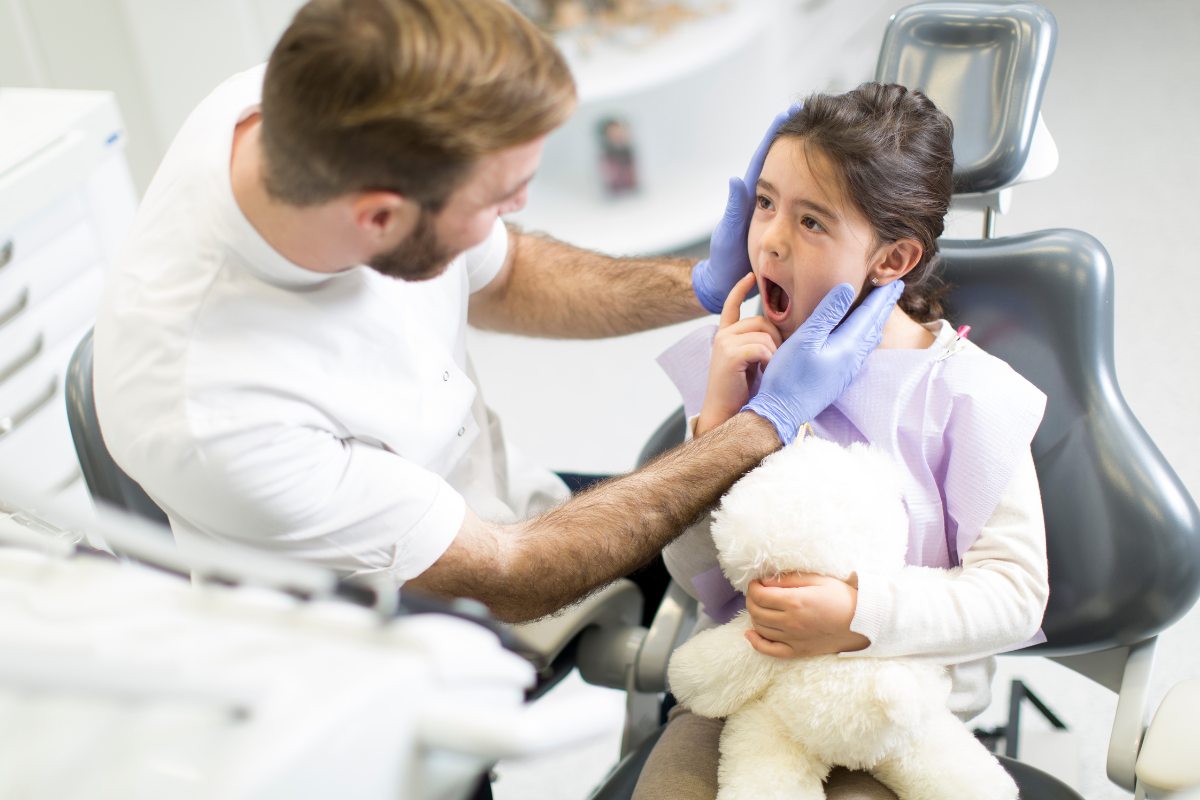
Can a Pediatric Dentist Spot Bite Problems Before Braces Are Needed?
September 17, 2026 11:33 amParents often assume orthodontic concerns become obvious only when a child’s permanent teeth are fully in or when someone mentions braces. In reality, the development of a child’s bite can be observed much earlier. The way baby teeth are lost, permanent teeth erupt, the jaws grow, and the upper and lower teeth come together can all provide useful information about a developing smile.
This does not mean every unusual tooth position requires treatment. Some changes are simply part of normal growth, while others may deserve closer observation or an orthodontic evaluation. Understanding that difference can help parents avoid both unnecessary worry and delayed care.
With pediatric dentistry Austin families can receive ongoing dental evaluations that look beyond cavities and cleanings. At Sherwood Pediatric Dentistry, we provide pediatric dental care designed around children’s changing teeth, jaws, oral habits, and overall development. Regular visits give our team opportunities to recognize changes in your child’s bite and discuss whether monitoring, additional evaluation, or future orthodontic care may be appropriate.
What Is a Developing Bite Problem?
A bite describes how the upper and lower teeth come together when a child closes their mouth. Ideally, the teeth should work together comfortably while allowing a child to bite, chew, speak, and maintain good oral function.
A developing bite problem, also called malocclusion, can involve the teeth, jaws, or both. It may become noticeable as a child grows and permanent teeth begin replacing baby teeth.
Some examples include:
- An overbite, where the upper front teeth extend significantly over the lower teeth
- An underbite, where the lower teeth extend in front of the upper teeth
- A crossbite, where some upper teeth sit inside the lower teeth
- An open bite, where certain upper and lower teeth do not meet
- Crowding caused by limited space for permanent teeth
- Significant spacing between teeth
- A bite that shifts when the child closes their mouth
- Permanent teeth that erupt in an unusual position
The important point for parents is that a developing bite does not automatically mean a child needs braces.
A pediatric dentist can observe the pattern over time and help determine whether the change appears to be part of normal development or something that deserves further evaluation.
Can a Pediatric Dentist Identify Bite Problems Before Braces?
Yes. A pediatric dentist can often notice potential bite and developmental concerns during routine dental appointments, even when braces are not yet appropriate.
A child’s dental examination is not limited to looking for cavities. During growth, a pediatric dental team can observe how teeth are erupting, how the jaws relate to one another, and whether certain oral habits may be influencing development.
What We Look At During Growing Years
At Sherwood Pediatric Dentistry, our approach to pediatric care includes paying attention to your child’s overall dental development. Depending on your child’s age and individual needs, an examination may help us observe:
- Tooth eruption and spacing
- Alignment of developing teeth
- How the upper and lower teeth meet
- Changes in the child’s bite over time
- Early or delayed loss of baby teeth
- Crowding or unusual tooth positioning
- Oral habits that may affect developing teeth
- Jaw growth and facial development
- Areas that may benefit from additional evaluation
These observations can be particularly useful because children do not all develop at the same pace.
A local dental practice that sees your child regularly can compare changes from one visit to the next instead of looking at the smile as a single snapshot.
Why Bite Monitoring Matters Before Braces
One of the biggest misconceptions parents have is that there are only two choices: do nothing or get braces.
There is actually a third option that is often very important during childhood monitoring.
A child may have a developing concern that does not require immediate treatment. The dentist may recommend keeping an eye on tooth eruption and jaw development and reassessing the situation during future visits.
In other situations, an early evaluation may be helpful because certain concerns can become more complicated as the child grows.
The goal is not to rush a child into orthodontic treatment. The goal is to understand what is happening early enough to make an informed decision about timing.
What Can a Pediatric Dentist Notice Before Parents Do?
Parents are often the first people to notice something unusual about a child’s smile. However, some developmental changes are subtle and may not be easy to recognize at home.
Changes in Tooth Eruption
A permanent tooth may emerge behind, in front of, or noticeably out of line with the baby tooth it is replacing. The position of the tooth and the amount of available space can help a dentist determine whether continued observation is appropriate.
Uneven Contact Between Teeth
When your child bites down, the upper and lower teeth may not come together evenly. A dentist can evaluate whether the pattern is temporary or suggests a developing bite concern.
Crowding
A child may have several permanent teeth trying to emerge into a space that appears too small. Crowding does not always mean immediate orthodontic treatment, but it can be something worth monitoring as more permanent teeth come in.
Changes in Jaw Relationship
Sometimes the concern involves more than tooth position. The relationship between the upper and lower jaws can influence how the bite develops.
These changes may be easier for a trained dental professional to recognize during regular examinations than when simply looking at a child’s smile in the mirror.
Does Every Bite Problem Mean My Child Needs Braces?
No.
This is one of the most important things parents should understand.
A pediatric dentist may identify a potential orthodontic concern without recommending braces. Depending on the child and the developmental stage, the appropriate next step may be:
- Continue routine dental monitoring
- Observe permanent tooth eruption
- Address an oral habit
- Take additional dental images when clinically appropriate
- Recommend an orthodontic consultation
- Consider early treatment when indicated
- Wait until more permanent teeth have developed
The correct approach depends on the specific problem, the child’s growth, and how the bite changes over time.
In fact, early identification can sometimes provide parents with reassurance that no treatment is needed right now.
When Might an Orthodontic Referral Be Recommended?
If our dentist observes a concern that requires more specialized assessment, an orthodontic consultation may be recommended.
An orthodontist can perform a more detailed assessment of tooth alignment, jaw relationships, eruption patterns, available space, and overall orthodontic development.
A referral does not mean your child will automatically receive braces.
The orthodontist may determine that your child:
- Does not need treatment at this time.
- Should return for monitoring.
- May benefit from early orthodontic treatment.
- Should begin treatment later when additional permanent teeth have erupted.
This collaborative approach allows parents to understand the situation before making decisions about orthodontic treatment.
Why Timing Can Matter During Childhood
Children’s mouths change considerably as they grow. Baby teeth are replaced by permanent teeth, jaw structures develop, and the bite gradually becomes more established.
That makes childhood an important period for observation.
Some orthodontic concerns may be easier to manage while a child is still growing, while others are better addressed later. The timing depends on the individual situation rather than simply the child’s age.
This is why routine pediatric dental appointments can be valuable even when your child appears to have a healthy smile.
Regular visits create opportunities to track development rather than waiting until a problem becomes obvious.
What About Oral Habits?
Certain childhood habits can influence how the teeth and jaws develop, particularly when they continue for an extended period.
Examples can include:
- Thumb or finger sucking
- Persistent pacifier use
- Tongue-thrusting patterns
- Certain mouth-breathing patterns
Not every child with one of these habits develops an orthodontic problem. However, if parents have concerns about how a habit may be affecting their child’s developing smile, discussing it with a pediatric dentist can provide useful guidance.
Instead of guessing whether a habit is causing a problem, parents can have the child’s development evaluated as part of regular dental care.
What Should Parents Watch for at Home?
Parents do not need to diagnose a bite problem themselves. However, noticing changes and mentioning them during a dental appointment can help the dental team understand what you are seeing at home.
Consider bringing up concerns such as:
- Your child consistently chewing on one side
- Difficulty biting certain foods
- Teeth that appear increasingly crowded
- A permanent tooth coming in far from its expected position
- A noticeable change in how the teeth meet
- The jaw shifting when your child closes their mouth
- Baby teeth that remain while a permanent tooth appears
- Frequent cheek or lip biting
- A noticeable change in facial or dental symmetry
One isolated observation does not necessarily indicate a serious problem. The value comes from having a pediatric dentist evaluate the overall pattern.
Why Pediatric Dentistry Is Different During the Growing Years
Children are not simply smaller versions of adult dental patients. Their mouths are constantly changing.
A pediatric dentist is trained to care for children at different developmental stages, from early childhood through adolescence. That means dental visits can address immediate oral health needs while also considering how the smile is developing.
At Sherwood Pediatric Dentistry, we provide comprehensive pediatric dental services for infants, children, and teens. Our services include preventive dental care, dental cleanings and exams, fluoride treatments, sealants, restorative care, pediatric sedation when appropriate, emergency dental care, laser dentistry, and other care designed around children’s needs.
Our role is not to tell every parent that their child needs orthodontic treatment. Instead, we focus on helping families understand what we see and what the next step may be.
How Regular Pediatric Dental Visits Create a Developmental Record
Imagine two children.
One child visits a dentist only when a tooth hurts. The other has routine dental examinations throughout childhood.
For the second child, the dental team has more opportunities to observe how baby teeth are lost, how permanent teeth erupt, how spacing changes, and how the bite develops.
That history can make it easier to recognize meaningful changes.
Regular appointments also allow parents to ask questions before a concern becomes urgent. If you notice that your child’s smile looks different from the previous year, for example, your dentist can compare the current development with earlier observations.
This is one reason consistent pediatric dental care can be about much more than preventing cavities.
Pediatric Dentistry in Austin for Growing Smiles
For Austin parents, choosing a pediatric dental office that understands children’s changing smiles can make dental care feel more proactive.
At Sherwood Pediatric Dentistry, we provide personalized pediatric dental care in Austin with attention to each child’s age, development, comfort, and oral health needs. Our team can evaluate developing teeth and bites during routine visits and help parents understand when continued observation or additional evaluation may be appropriate.
If an orthodontic concern becomes apparent, we can discuss whether an orthodontic consultation makes sense rather than assuming that braces are immediately necessary.
This approach gives families a clearer path forward: observe when observation is appropriate, intervene when intervention is beneficial, and seek specialized orthodontic care when it is needed.
FAQs About Pediatric Bite Development
1. Can a pediatric dentist tell if my child may eventually need braces?
A pediatric dentist can identify developing bite, spacing, eruption, or alignment concerns and discuss whether an orthodontic evaluation may be appropriate. However, identifying a concern does not mean your child will definitely need braces.
2. At what age should my child’s bite be evaluated?
Bite development can be observed during routine pediatric dental visits throughout childhood. If you notice unusual tooth eruption, crowding, an uneven bite, or another concern, we recommend discussing it with your child’s dentist rather than waiting for a particular age.
3. Does an early orthodontic evaluation mean my child will get braces?
No. An evaluation may simply confirm that your child’s development is progressing normally. In other cases, the recommendation may be continued monitoring or treatment at a later stage.
4. What should I do if my child’s permanent teeth are coming in crooked?
Bring the concern to your pediatric dentist. Crooked or crowded teeth can have several possible developmental explanations, and an examination can help determine whether the tooth position should be monitored or evaluated further.
5. Can Sherwood Pediatric Dentistry help monitor my child’s developing smile?
Yes. We provide pediatric dental care that includes routine examinations and ongoing attention to children’s dental development. If we identify a concern that may benefit from orthodontic assessment, we can discuss the appropriate next step with you.
Give Your Child’s Growing Smile the Attention It Deserves
Your child does not have to wait until braces are being discussed for bite concerns to receive attention. Changes in tooth eruption, spacing, alignment, and jaw development can be observed during regular pediatric dental care.
Early recognition does not always lead to early treatment. Sometimes the best recommendation is simply to monitor your child’s growth. Other times, an orthodontic evaluation may help determine whether additional care could be beneficial.
At Sherwood Pediatric Dentistry, we provide personalized pediatric dentist in austin, Texas, with an emphasis on healthy development, prevention, comfort, and long-term oral health. If you have noticed changes in your child’s bite or simply want to understand how their smile is developing, our team can help you determine the next step.
Book Now to schedule your child’s visit with Sherwood Pediatric Dentistry and keep their growing smile on the right track.
Categorised in: Pediatric Dentistry